Understanding the difference between Creole and Cajun food is essential for anyone exploring Louisiana’s rich culinary heritage. While both cuisines originated in Louisiana and share some similarities, they have distinct characteristics in ingredients, preparation methods, and cultural influences that make each unique in American gastronomy.
What Is Cajun Cuisine
Cajun food originates from the Acadian French settlers who were expelled from Canada in the 1750s and eventually settled in rural Louisiana. This rustic cuisine developed out of necessity, utilizing whatever ingredients were available in the bayous and prairies. Cajun cooking emphasizes one-pot meals that could feed large families with minimal resources, creating hearty and flavorful dishes that sustained hardworking communities.
The foundation of Cajun cuisine relies heavily on local ingredients like rice, seafood, and game meats. Cajuns perfected techniques for preserving meat through smoking and making sausages, which became integral to their culinary identity. This cuisine is characterized by its simplicity and bold flavors, often achieved through the masterful use of seasonings and cooking techniques passed down through generations.
What Is Creole Cuisine
Creole cuisine developed in New Orleans as a sophisticated fusion of French, Spanish, African, and Caribbean influences. This urban cooking style emerged from the multicultural environment of the city, where wealthy plantation owners and merchants had access to imported ingredients and elaborate cooking techniques. Creole dishes often feature tomatoes, butter, and cream, ingredients that were more readily available in the cosmopolitan setting of New Orleans.
The complexity of Creole food reflects the diverse cultural heritage of its creators. African slaves, French and Spanish colonists, and Caribbean immigrants all contributed techniques and flavors that shaped this refined cuisine. Creole cooking emphasizes sophisticated sauces, delicate seasonings, and presentation, making it the more elegant cousin of Louisiana’s culinary traditions.
Key Ingredients and Seasonings
Both cuisines share the famous Holy Trinity – onions, celery, and bell peppers – as their aromatic base, but their additional ingredients create distinct flavor profiles. Understanding these ingredient differences helps identify whether a dish follows Cajun or Creole traditions in Louisiana cooking.
Essential Cajun Ingredients
Cajun recipes rely on simple, locally-sourced ingredients that reflect the rural lifestyle of early Acadian settlers. Common proteins include crawfish, shrimp, oysters, catfish, alligator, duck, and various game meats. The seasoning profile emphasizes cayenne pepper, paprika, garlic powder, onion powder, and black pepper, creating the characteristic heat that defines Cajun cuisine. Rice serves as the primary starch, often cooked with the main dish to absorb all the flavorful juices.
Essential Creole Ingredients
Creole cooking incorporates more diverse and expensive ingredients that were accessible in New Orleans’ international port. Tomatoes, butter, cream, and wine feature prominently in many dishes. Seafood selections include oysters, shrimp, crab, and fish, but also expensive imported items. The seasoning approach uses more herbs like thyme, bay leaves, and parsley, along with the signature Creole seasoning blend that includes paprika, oregano, and garlic.
Cooking Methods and Techniques
The difference between Creole and Cajun food becomes apparent in their cooking methods. Cajun cuisine emphasizes rustic, one-pot cooking methods like jambalaya, gumbo, and étouffee, where ingredients simmer together to create complex flavors. These techniques developed from practical necessity, allowing busy families to prepare nutritious meals with minimal cleanup.
Creole cooking techniques are more refined, often involving multiple steps and sophisticated sauce-making. French influences appear in techniques like making roux, creating elaborate stocks, and preparing intricate sauces. The urban setting of New Orleans allowed for more elaborate cooking methods that required time and specialized equipment unavailable in rural Cajun communities.
Iconic Dishes Comparison
Recognizing signature dishes helps distinguish between these two Louisiana cuisines. Each tradition has developed iconic recipes that showcase their unique characteristics and cultural influences.
Famous Cajun Dishes
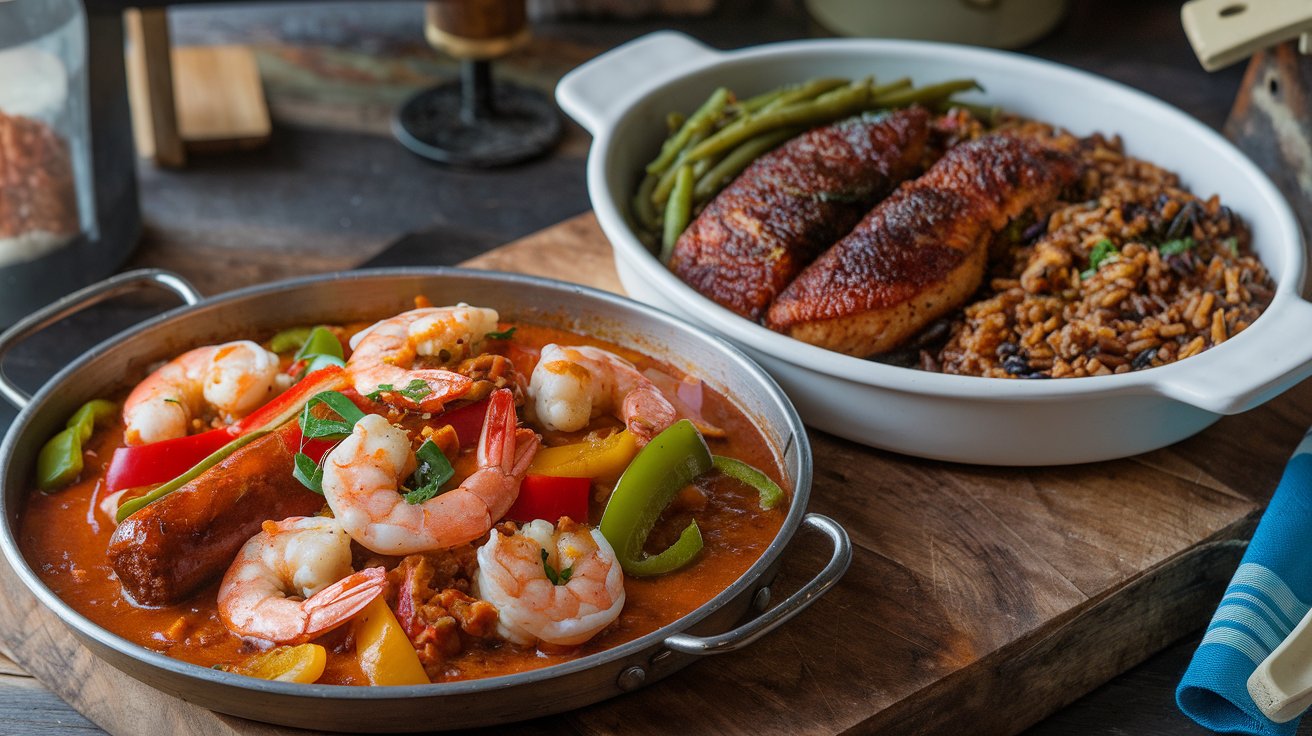
Cajun dishes include jambalaya (without tomatoes), crawfish étouffee, boudin sausage, blackened fish, and dirty rice. These dishes emphasize bold spices and simple preparation methods. Gumbo in Cajun tradition typically starts with a dark roux and excludes tomatoes, focusing on the deep, rich flavors achieved through careful browning of the flour and oil mixture. Other staples include tasso ham, andouille sausage, and various forms of rice-based dishes.
Famous Creole Dishes
Creole dishes include shrimp and grits, bananas foster, bread pudding with whiskey sauce, and Creole gumbo (which often contains tomatoes). Oysters Rockefeller, developed in New Orleans, exemplifies Creole sophistication with its rich spinach and herb topping. Creole jambalaya typically includes tomatoes and follows a more structured cooking process, while dishes like barbecue shrimp showcase the cuisine’s love for butter and rich sauces.
Spice Levels and Heat Comparison
One of the most common questions about Louisiana cuisine is which is hotter, Cajun or Creole. Generally, Cajun food tends to be spicier due to its generous use of cayenne pepper and hot spices. The rural origins of Cajun cuisine meant that bold seasonings were necessary to enhance simple ingredients and preserve food in the humid Louisiana climate.
Creole cuisine typically offers more complex flavor profiles with moderate heat levels. While some Creole dishes can be quite spicy, the cuisine generally emphasizes balanced flavors rather than pure heat. The sophisticated palate of urban New Orleans diners preferred nuanced seasoning that complemented rather than overwhelmed the primary ingredients, especially when using expensive imported components.
Cultural and Historical Origins
The historical context explains many differences between these cuisines. Cajun culture developed in isolation in rural Louisiana, where French Acadian exiles created a tight-knit community focused on survival and self-sufficiency. Their cuisine reflects this reality with practical, filling dishes that could feed large families economically.
Creole culture emerged in cosmopolitan New Orleans, where diverse ethnic groups interacted in a wealthy urban environment. This multicultural setting allowed for culinary experimentation and refinement impossible in rural areas. The availability of imported ingredients and skilled cooks from various backgrounds created the sophisticated fusion that defines Creole cuisine today.
Modern Interpretations in 2026
Contemporary American restaurants continue to evolve both Cajun and Creole traditions while maintaining their essential characteristics. In 2026, many establishments across the United States offer fusion approaches that combine elements from both cuisines, though purists maintain the traditional distinctions. Food trucks and casual dining establishments have popularized simplified versions of classic dishes, making Louisiana flavors accessible nationwide.
Modern health consciousness has influenced both cuisines, with restaurants offering lighter versions of traditional dishes. Creole restaurants often adapt their cream and butter-heavy dishes, while Cajun establishments may reduce sodium and oil content without sacrificing the bold flavors that define the cuisine. This evolution ensures these traditional Louisiana cooking styles remain relevant to contemporary American dining preferences.
How to Identify Cajun vs Creole Dishes
Learning to tell the difference between Creole and Cajun dishes requires attention to specific indicators. Look for tomatoes in the dish – their presence usually indicates Creole influence, while their absence suggests Cajun origins. The presence of cream, butter, or wine also typically points to Creole preparation, while simpler ingredient lists suggest Cajun cooking.
Color can provide additional clues about Louisiana cuisine origins. Cajun dishes often feature darker colors from extensive browning and darker roux, while Creole dishes may be lighter or have red tints from tomato inclusion. Spice level, while variable, generally trends higher in Cajun preparations. Understanding these visual and flavor cues helps diners appreciate the distinct traditions behind Louisiana’s most famous culinary exports.
Related video about difference between creole and cajun food
This video complements the article information with a practical visual demonstration.
Most asked questions about difference between creole and cajun food
Is Cajun food the same as Creole food?
No, Cajun and Creole foods are distinct Louisiana cuisines. Cajun originated from rural French Acadian settlers and emphasizes simple, spicy one-pot meals. Creole developed in urban New Orleans with multicultural influences, featuring more sophisticated dishes with tomatoes, cream, and complex sauces.
Which is hotter, Cajun or Creole cuisine?
Cajun cuisine is generally hotter than Creole food. Cajun dishes use more cayenne pepper and bold spices due to their rural, practical origins. Creole cuisine focuses on balanced flavors and moderate heat levels, emphasizing sophisticated seasoning over pure spiciness.
How can I tell if a dish is Cajun or Creole?
Look for tomatoes (indicates Creole), check for cream or butter (usually Creole), and assess spice levels (Cajun tends to be spicier). Cajun dishes typically have darker colors from extensive browning, while Creole dishes may be lighter or have red tints from tomato inclusion.
Is Cajun and Creole seasoning the same?
While both use the Holy Trinity (onions, celery, bell peppers) as a base, the seasonings differ. Cajun seasoning emphasizes cayenne pepper, paprika, and garlic powder for heat. Creole seasoning includes more herbs like oregano, thyme, and bay leaves for complex flavors rather than intense heat.
What are the main ingredients in Cajun versus Creole cooking?
Cajun cooking uses simple, local ingredients like rice, crawfish, game meats, and cayenne pepper. Creole cuisine incorporates more expensive items like tomatoes, butter, cream, wine, and imported spices, reflecting its urban New Orleans origins and multicultural influences.
| Cuisine Aspect | Cajun Characteristics | Creole Characteristics |
|---|---|---|
| Origins | Rural French Acadian settlers | Urban New Orleans multicultural |
| Tomato Usage | Rarely used | Frequently included |
| Spice Level | Generally hotter | Moderate, balanced |
| Cooking Style | One-pot, rustic | Sophisticated, multi-step |
| Key Ingredients | Rice, cayenne, local seafood | Butter, cream, imported spices |